
I’ve spent almost a decade building a business on a simple proposition: the leaders and organisations that thrive through change and uncertainty are the ones who build out from, and lead, with courage.
So when I finally dug into Harvard Business Publishing’s 2026 Global Leadership Study, it wasn’t just an interesting read. It was a decade of my own conviction and research findings, compiled albeit in an AI-centric report.
The data is unambiguous. Asked what leaders need to meet today’s business demands:
· 80% point to the ability to function in an environment of constant uncertainty, change and stress
· 78% point to mastering wider leadership behaviours
· 74% point to openness - the willingness to adapt behaviour to the situation and the person in front of you
None of that will surprise anyone who’s spent time in a leadership team meeting in the last two years. What did stop me, though, was this:
“The top two leadership capabilities identified this year were demonstrating emotional and social intelligence (45%) and building agility and resilience (43%) - human leadership qualities which rank well above more business-centred capabilities such as decision making (30%) when it comes to meeting today’s business needs.”
It was decision making, filed under “business-centred,” that jarred, sitting apart from the human qualities it’s actually bound up with. I understand why. It’s a tidy category. But it’s the one place in an otherwise excellent report where I think the language slips, and it is an important one as we move forwards with technology.
We can’t separate humans from the climate they lead in
Our humanity as leaders isn’t emotional and social intelligence and resilience and decision making, filed in three neat boxes. It’s all one thing. What we do with our emotional and social intelligence, how we build and practise resilience and agility - these are, in practice, decisions. Human ones. The value in all of it only gets unlocked the moment someone chooses to act, or makes the call, in a situation where the answer isn’t sitting in a spreadsheet.
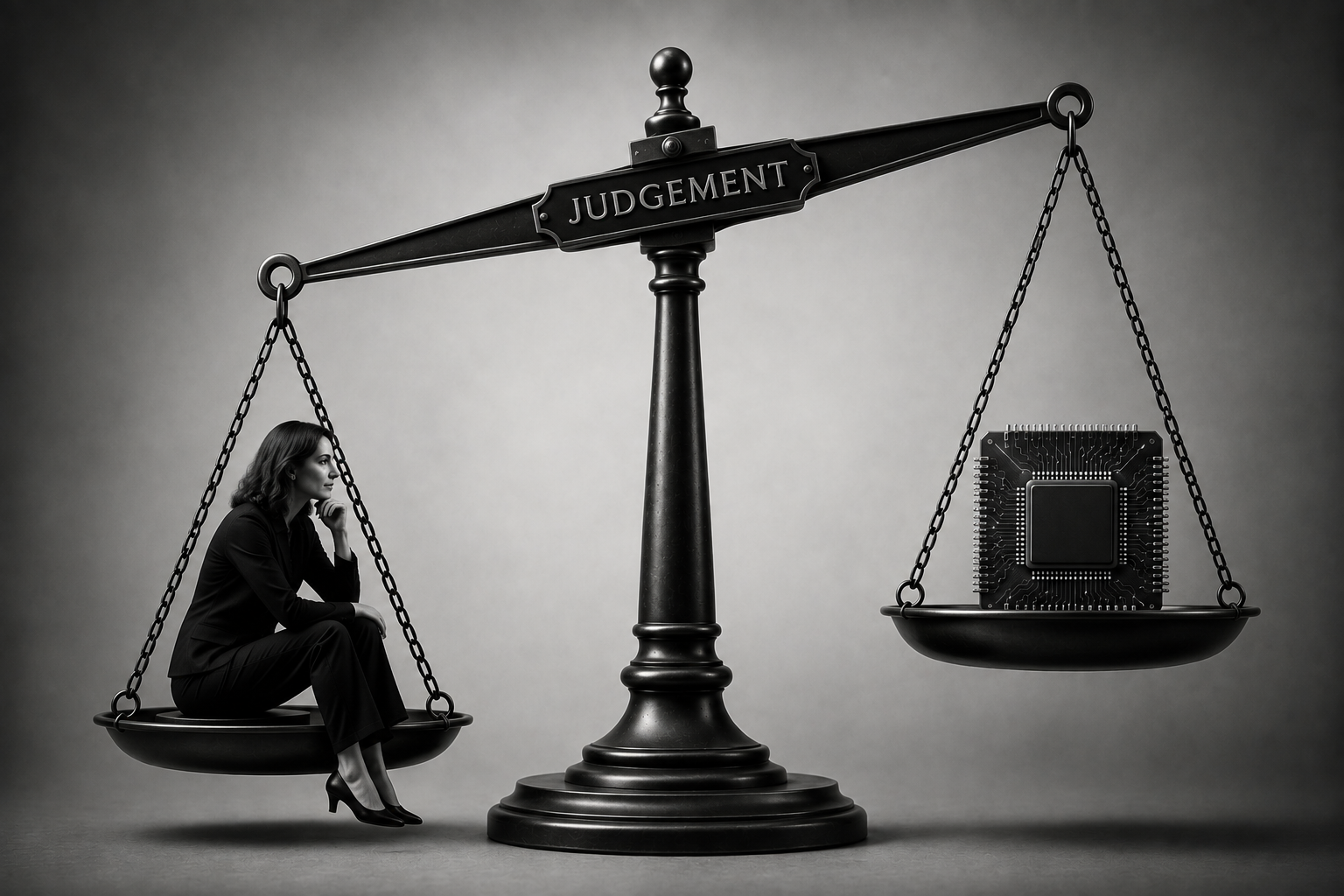
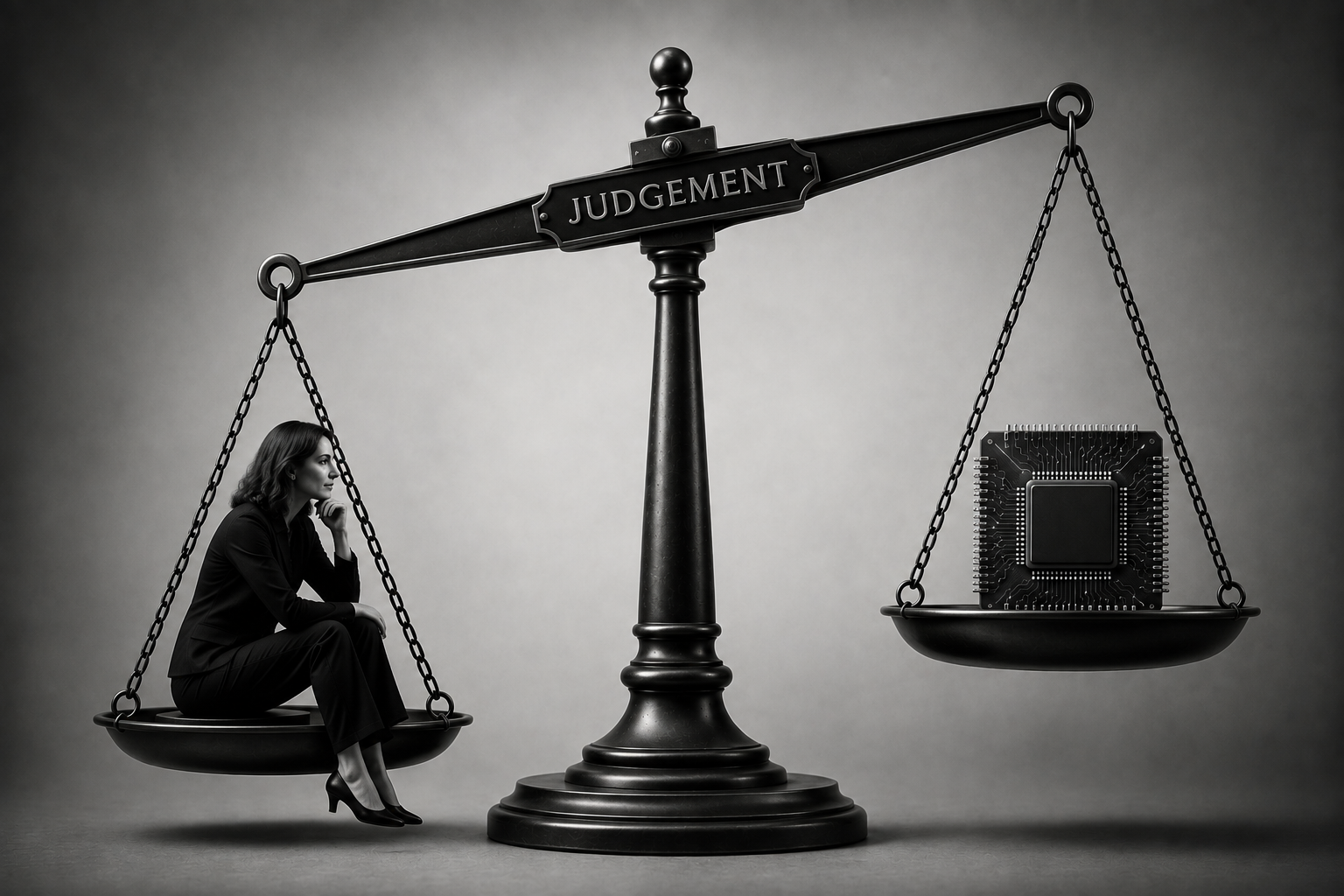
So we must be careful not to make the mistake of handing “decision making” over to the language of algorithms and large language models, as if it’s the tidy, computational cousin of the messy “soft” human stuff.
Our ability to problem-solve, to make value-based and ethical decisions in the moments that actually matter - that’s not a business-centred capability running alongside our humanity. It is our humanity. It’s the thing that lets us build and practise courage in the first place, and it’s the thing that separates a leader from a very well-informed calculator.
Confidence in judgement, because of AI, not in spite of it
This is why I keep saying leaders need more confidence in their decision-making and human judgement because of AI, not in spite of it. AI may well take over the parts of a decision that can be computed, but that leaves the parts that can’t, ambiguity, values, relationships, the invisible forces more exposed, and more obviously on us. Not to argue with what the technology produces for the sake of it, but to apply judgement in exactly the moments technology can’t reach - the ones with no clean data, no predictable scenarios, just a room full of people waiting to see what to do next.
This is the practical applied science built in to our flagship programme, masterclasses and workshops: the role emotion, data, cognition, and our read of relationships and context all play in the leadership calls that actually matter. Where the risks, uncertainty and complexity require us to choose courage. Not because it’s a nice framework. Because it’s what’s really happening, every time a good leader makes a hard call - and no report category, however well-intentioned, should talk us out of noticing it, or investing in it.