Relationships

Professional courage in governance: the capability the standards assume

The standards require it. What does it actually mean in practice?

“Demonstrate integrity and professional courage”

Standard 1.1 of the 2024 Global Internal Audit Standards requires internal auditors to perform their work with honesty and professional courage. The expectation is clear. The definition is not.

The Standards assume we already know what professional courage means. They do not explain how it shows up in the room, under pressure, when the issue is politically awkward and the consequences of challenge are personal rather than procedural.

This is where governance work becomes human.

Where professional courage is tested

Anyone working in second- or third-line roles recognises the moment. The tensions that arise when you are the one expected to raise the difficult point.

You are visible. You are accountable. You know that staying quiet would be safer.

Most governance leaders know what needs to be said. The harder question is how to say it well, at the right time, in a way that preserves influence rather than diminishing it, and then how to stand by that judgement when it is challenged.

That challenge is not primarily technical. It is behavioural.

The gap between knowledge and action

Governance functions invest heavily in frameworks, methodologies and technical rigour. Professionals are trained to interpret standards and follow process with care.

What receives less structured attention is the behavioural side of applying judgement under pressure.

Behavioural science research consistently shows that human decisions are shaped by cognitive bias, hierarchy, perceived threat and reputational concern. These forces influence how people speak, challenge and escalate - particularly when the stakes are high. Knowing the right answer and being able to act on it are not the same capability.

Professional courage sits in that gap.

Defining professional courage for governance

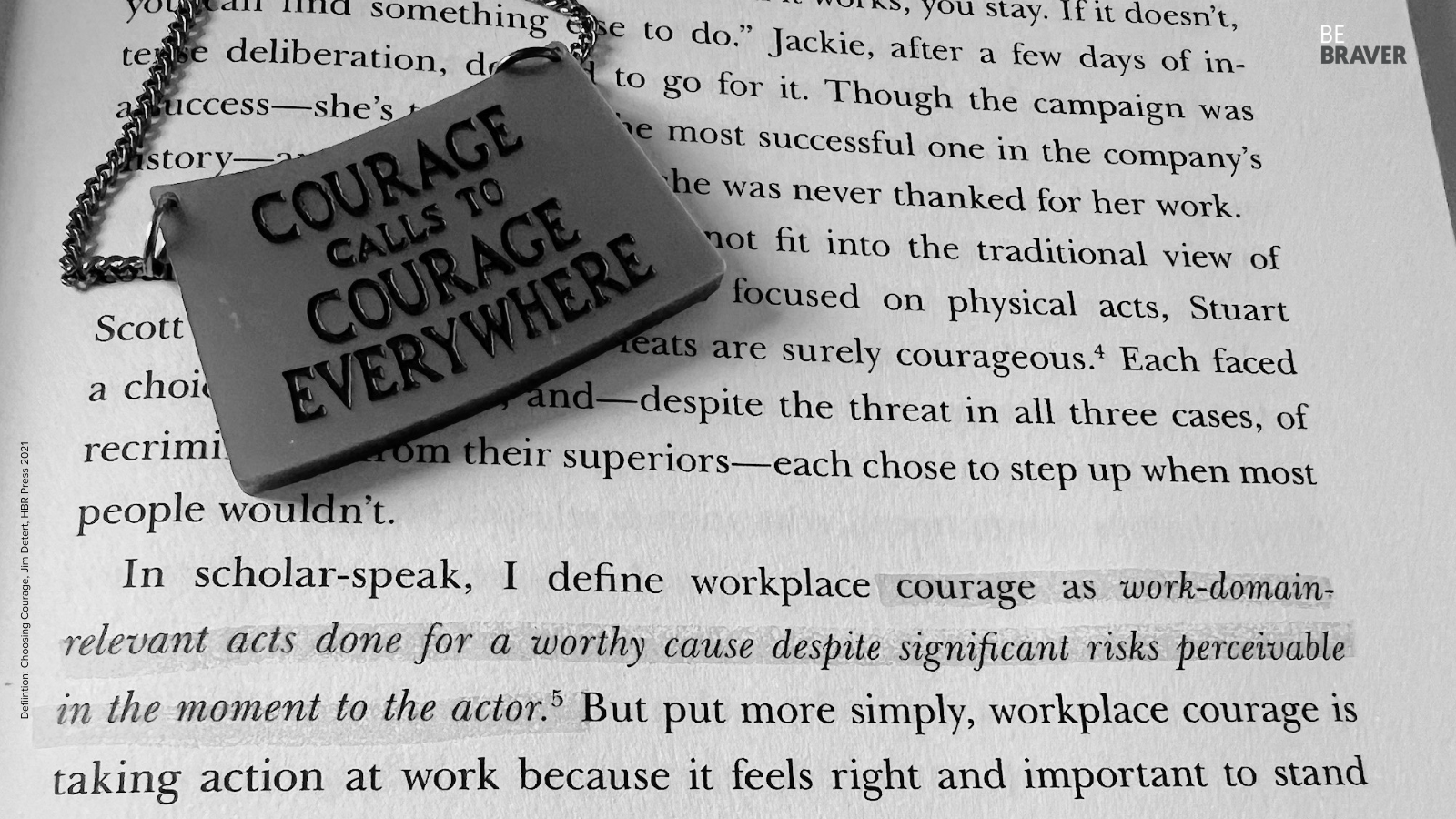
There are multiple definitions of courage across psychology, philosophy and organisational research. Some centre fear. Others emphasise moral virtue. Others focus on risk-taking behaviour.

Rather than assume a single universal definition, it is more useful to ask what courage must mean within the specific context of governance.

In oversight roles, the central issue is not dramatic heroism. It is the capacity to exercise independent judgement when doing so creates exposure.

For governance professionals, professional courage can therefore be defined as:

The enactment of independent, values-aligned judgement under conditions of experienced personal or relational exposure.

This definition is deliberate. It recognises that:

  • Courage in governance is rarely physical; it is reputational and relational.

  • Exposure is often social rather than procedural.

  • The potential cost may be to standing, influence or professional relationships.

  • The actor is aware of that exposure when choosing to act.

Courage, in this context, is not simply about emotion. It is about recognising exposure and exercising sound judgement anyway.

In governance environments, where visibility, accountability and hierarchy are real, that distinction matters.

Why professional courage is harder than it sounds

The leaders I speak with are rarely lacking integrity or commitment. They are navigating genuine complexity:

  • Incomplete or evolving evidence

  • Competing organisational priorities

  • Relationships that must endure beyond the difficult conversation

  • Sustained executive pushback

Professional courage is most demanding when the risk is relational and reputational rather than technical - when the exposure is social, political or career-impacting rather than procedural.

The hesitation before raising a concern. The pull toward a softer version of the truth. The gradual erosion of confidence under challenge.

These are not failures of knowledge. They are human responses to exposure.

What behavioural science adds

When stakes are high, the brain becomes more sensitive to threat. Cognitive biases can distort risk perception. Social hierarchies can amplify the perceived cost of dissent. The desire to protect credibility or preserve working relationships can quietly compete with the duty to challenge.

In oversight roles, these pressures are intensified. Scrutiny is high. Authority structures are visible. Relationships must continue after the meeting ends.

Professional courage is therefore not merely conviction. It is judgement exercised within a web of psychological and social pressures.

Understanding those pressures does not dilute governance. It strengthens it.

Developing professional courage

If professional courage were purely a personality trait, Standard 1.1 would offer limited practical leverage. But it can be strengthened.

In my work at the intersection of psychology, neuroscience and applied decision science, three areas consistently matter:

Cognitive awareness
Recognising how bias, hierarchy and threat responses influence judgement and communication.

Relational capability
Learning how to challenge constructively - maintaining connection while expressing difficult truths.

Behavioural practice
Rehearsing escalation, executive challenge and difficult conversations so that courageous action becomes deliberate rather than reactive.

Professional courage grows through structured reflection and practice - just as technical governance capability does.

Governance for good is behavioural

Principle 1 assumes integrity and professional courage are present. But these are not checklist items. They are behaviours.

They show up in how executive pushback is handled. In how hesitation is managed. In how independence is balanced with influence.

Governance failures rarely begin with incompetence. They begin with unraised concerns, softened language or delayed escalation.

Professional courage is the capability that interrupts that drift. The Standards assume it.

The question is how deliberately we choose to define it - and build it.

The Missing Humans in Decision Making

The Missing Humans in Decision-Making

In the rush to quantify, regulate, and automate decision-making, we risk missing the invisible human factors that actually shape outcomes. Numbers alone can’t capture the full picture. Culture, human risk, trust, and courage, that which is often unseen can often make the difference.

What happens in our internal worlds, influences how we interpret and respond to that which happens in our external worlds.

Making the Invisible Visible

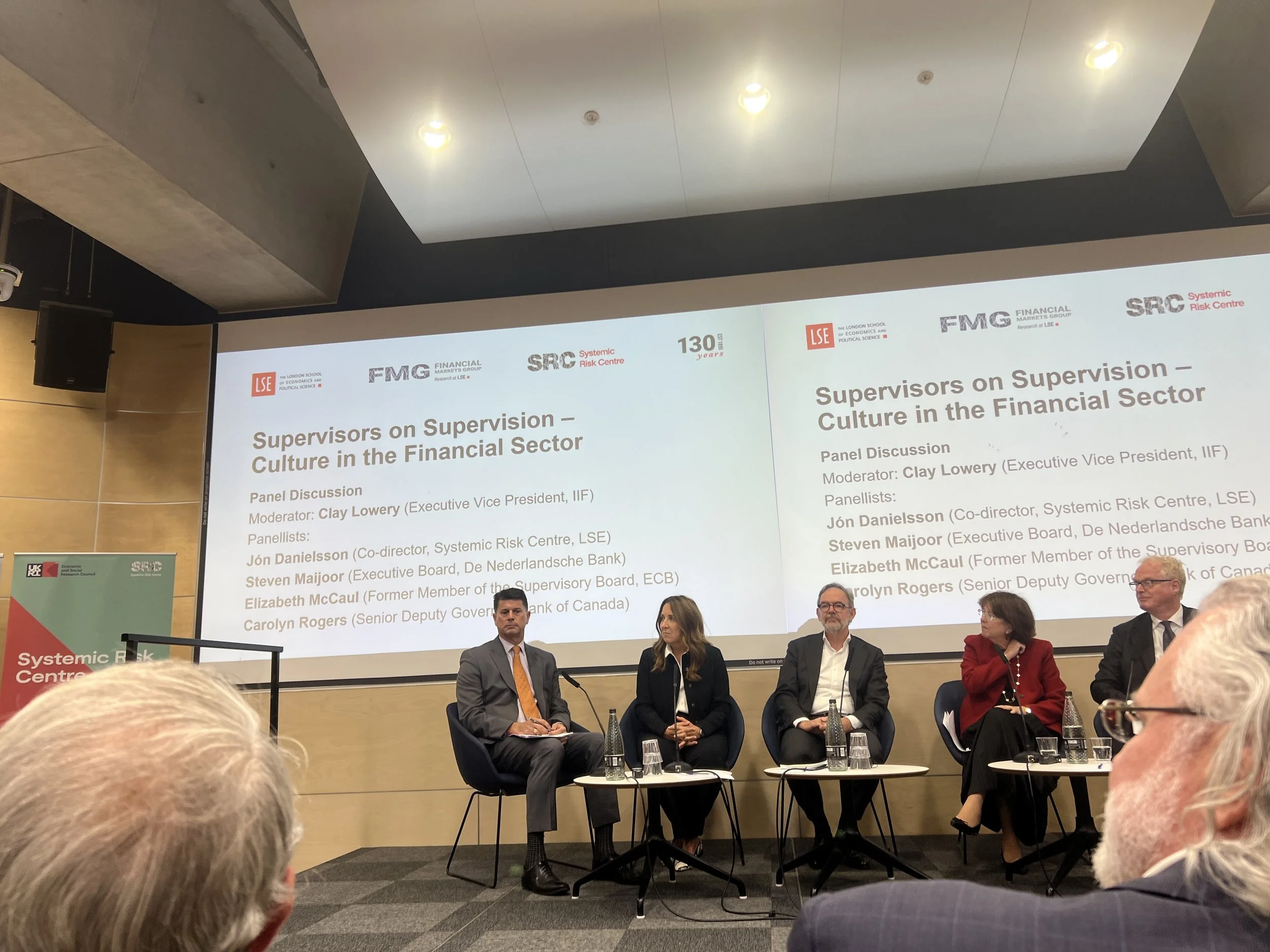
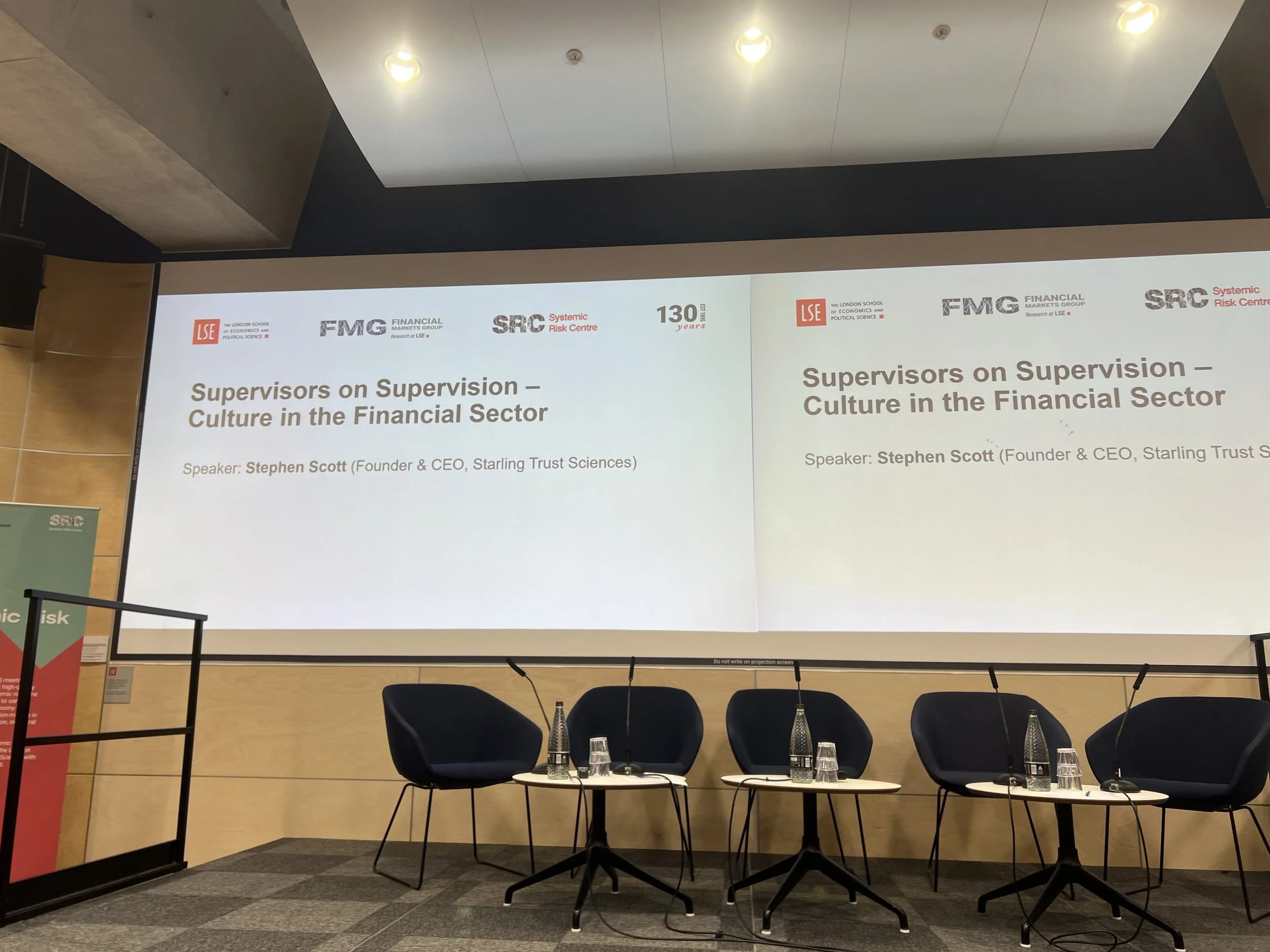
At the London School of Economics last week, I heard senior regulators and supervisors debate culture in the financial sector. Governors, central bankers, regulators.


The conversation was robust, technical, and deeply important. With the leaders who make decisions that affect us all. The topic ‘Culture in the financial sector’. How refreshing.

And yet, I was struck mostly by what wasn’t said.

There was no mention of neuroscience.
No mention of psychological safety.
No reference to human blind spots.
Bias was discussed - but only in the context of AI, not people.

Distracted by who wasn’t invited to the discussion.

These omissions matter. Ironically. one could say they are visible blind spots.

Because the greatest risks in governance don’t come from algorithms.

I’ve worked a lot delivering leadership programmes for governance professional and coached many. Risks come from humans failing to see, name, or voice the truths that matter most.

When governance aligns with how the brain functions best, boards make sharper decisions, hold healthier debates, and deliver more resilient outcomes.

The Data We Keep Ignoring

The GAABS Workplace Decision-Making report is a sobering read:

  • 46% of leaders lack clarity on the process.

  • 35% equate good outcomes with good decisions.

  • 91% think they are above average in decision-making, while 85% have never had formal training.

Confidence is high. Competence is low. And when leaders conflate outcomes with process, they create false learning loops -  reinforcing luck and overlooking blind spots.

Boards fare little better. The Boardroom Decision-Making Effectiveness Index 2025 shows:

  • Only 44% of directors feel psychologically safe.

  • Just 24% feel safe to challenge decisions.

  • Yet boards with high safety are three times more effective in strategy, culture, and governance.

The message is clear: decision-making quality is undermined by overconfidence, poor process clarity, and unsafe cultures. The data confirms what many of us know intuitively: without trust, respect, and courage, boards default to silence, lobbying, and groupthink.

This data legitimises a point in the language of boards. Because many board directors have little experience or literacy in this terrain. Human skills. They often won’t invest in it unless the numbers back it up.

What We’re Missing

We are in danger of missing the humans.

Decision-making isn’t purely rational. It isn’t all numbers, models, and predictable probabilities. Risk management may be the discipline, but it unfolds in environments where humans operate - and humans are messy, unpredictable, and often blind to their own internal judgments.

It cannot all be seen. Neuroscience shows that under perceived threat, the brain’s prefrontal cortex - responsible for reasoning and judgment - shuts down. Psychological safety keeps the brain open, enabling innovation, problem-solving, and foresight.

But safety alone is not enough. Culture creates the space - courage fills it.

Without courageous decision-making, psychological safety risks becoming a talking shop rather than a performance driver. It takes courage for directors to voice dissent, for executives to surface early warning signals, and for regulators to acknowledge when culture, not compliance, is the deeper threat.

The Golden Thread of Courage

Courage is the thread that runs through every effective decision where uncertainty and human risk are present. Psychological safety may open the door, but it is courageous decision-making that walks us through it.

  • Courage to surface blind spots.

  • Courage to prioritise ethics over economics.

  • Courage to create cultures where ambiguity is debated, not silenced.

  • Courage as a discipline, not a personality trait.

Without courage, psychological safety risks becoming a talking shop. With it, psychological safety lays the foundation. Courageous decision-making builds the structure.

Risk, Uncertainty, and Ambiguity

I don’t claim to have fixed answers here - only reflections as I sit with what I’ve been reading, researching, and listening to. But I do have answers for making the invisible dimensions of human decision making visible. To improve outcomes and culture.

A striking question at the LSE event left me wanting to stand and applaud, came from a psychologist. The question was trying to introduce ethics into the debate, but the response reframed it back into economics - precisely the blind spot I believe we must challenge

That misses something vital.

  • Risk
    Machines are brilliant at calculating probabilities. But humans bring something else: moral weight. A 5% chance of economic contraction is not the same as a 5% chance of mass loss of life. During COVID-19, Jacinda Ardern chose to prioritise lives over GDP. That was not a calculation a machine could make - it was a values-based, courageous decision.

  • Uncertainty
    Here, no model gives clarity. What matters is whether leaders can look one another in the eye in the storm and say: we don’t know, but we will act together. Trust and psychological safety are what allow boards and governments to make uncertain calls without paralysis or bravado.

  • Ambiguity
    This is where human judgment is most irreplaceable. When the very nature of the threat is unclear, efficiency won’t save us. We need dialogue, diversity of thought, and ethical discernment. Ambiguity requires cultures where dissent is welcomed and moral trade-offs can be openly debated.

And yet, humans are also our own enemy here. We are prone to optimism bias in risk, to freezing in uncertainty, and to silence or hierarchy in ambiguity. The paradox is that we can add what machines lack - trust, courage, ethics - but only if we have leaders courageous enough to create the conditions that surface them rather than bury them.

From Oversight to Foresight

The Boardroom Index notes that high-performing boards engage in scenario planning, surface ethical dilemmas early, and steward culture with accountability. These are not technical achievements. They are human ones.

GAABS shows us that leaders often overestimate their decision-making skill. The Boardroom Index shows us that boards underestimate the importance of psychological safety. And the LSE event showed me how even regulators can overlook the human blind spots driving systemic risk.

Together, they highlight a critical truth: risk management is not just technical. It is cultural and psychological.

The Courageous Decision Agenda

So what must leaders and boards do?

  • Make the invisible visible

    Treat silence, fear, and overconfidence as risk signals, not background noise.

  • Embed psychological safety

    Not as a soft ideal, but as a governance KPI.

  • Reframe decision quality

    Judge by process (values, ethics, bias-awareness), not outcome.

  • Train courage as a discipline

    Through decision workouts, structured feedback, and reflection loops.

  • Name hidden risks

    Status, power dynamics, alienation, chaos - these are not soft issues but material risks to decision quality.

The Human Advantage

Risk isn’t reduced by data alone. It’s reduced when humans make courageous decisions in cultures that allow truth to be spoken.

Psychological safety is the diagnosis. Courageous decision-making is the prescription..

If boards and leaders want to steward their organisations through uncertainty, growth, and disruption, they must go beyond culture change. They must build a new discipline: one where courage, ethics, and human risk awareness are treated as seriously as financial oversight.

That is the Be Braver promise.
Not simply “better culture.”
Not only “braver leaders.”

Not simply a cultural diagnosis. We prescribe courage.


But a pioneering framework for courageous decision-making - to be published soon - fit for the risks of our time.